Last updated on November 17, 2026
There is a moment, right when the spoon goes in, that tells you everything about a chocolate mousse. A good one gives way like a cloud — light, airy, almost weightless — and then melts into the richest chocolate you have ever tasted. This chocolate mousse recipe is the one I have made more times than I can count, in my own kitchen and in professional ones, and it has never once let me down. It takes twenty-five minutes of active work, seven pantry ingredients, and no gelatin, no baking, and no special equipment. Dark chocolate does the flavoring, whipped cream and whipped egg whites do the lifting, and four hours in the fridge does the rest. What you get is a mousse that tastes like the chocolate you actually wanted as a kid, only better — darker, silkier, and made from scratch.
If you have only ever eaten mousse from a plastic cup at the supermarket, this recipe will surprise you. Store-bought mousse is fine, but it tastes like a shortcut — a little flat, a little too sweet, and heavy in a way real mousse never is. This version is rich without being heavy, sweet without being cloying, and it has a real chocolate depth that comes from using good dark chocolate and nothing to hide it. It is the same approach behind our chocolate cake recipe and our chocolate pudding recipe: good chocolate, the right ratios, and no fuss. Make it in the morning, chill it all day, and serve it after dinner with a cloud of whipped cream on top.
Table of Contents
- Why This Recipe Works
- Ingredients
- How to Make Chocolate Mousse
- Pro Tips for the Best Results
- Substitutions and Variations
- How to Store
- Frequently Asked Questions
- Nutrition
- More Recipes You Will Love
Why This Recipe Works
Mousse looks fancy, and it is — but only if the technique is right. The whole dessert is a balancing act between richness and air. Too little whipping and it is dense. Too much folding and it collapses. Here is why this version works, every single time:
- Two kinds of air. Whipped cream and whipped egg whites each do a different job. The cream gives the mousse its rich, velvety body, and the egg whites give it its lift and lightness. Either one alone makes a decent mousse; together they make the classic French texture — a spoonful that holds its shape and then melts on your tongue.
- Real dark chocolate, nothing to hide it. Seven ounces of dark chocolate at 60 to 70 percent cocoa is the whole flavor of this dessert. There is no flour, no cornstarch, and no gelatin in the way, so the chocolate you choose is the chocolate you taste. Use chocolate you like eating; the flavor comes through completely.
- Egg yolks enrich the base. The yolks whisk into the warm chocolate and give the mousse its smooth, custardy richness and its deep color. They also help the mousse set — the chocolate firms up around them in the fridge, which is why this recipe needs no gelatin at all.
- The sugar is split for a reason. Half the sugar goes into the chocolate base with the yolks, where it dissolves into the warm chocolate. The other half goes into the egg whites, where it stabilizes them into stiff, glossy peaks that hold their air. Splitting it is a small detail that makes both parts work better.
- Chilling sets the texture. The mousse is assembled in twenty-five minutes, but it becomes mousse in the fridge. Four hours of chilling firms the chocolate, lets the flavors meld, and gives you that clean, spoonable texture. Overnight is even better, which makes this a perfect make-ahead dessert.
None of this needs special equipment. A heatproof bowl, a whisk, an electric mixer, and six small cups or ramekins are all it takes.
Ingredients
Seven ingredients, all pantry staples. The chocolate matters most here — buy the best dark chocolate you can, at 60 to 70 percent cocoa, and the rest of the recipe will take care of itself.
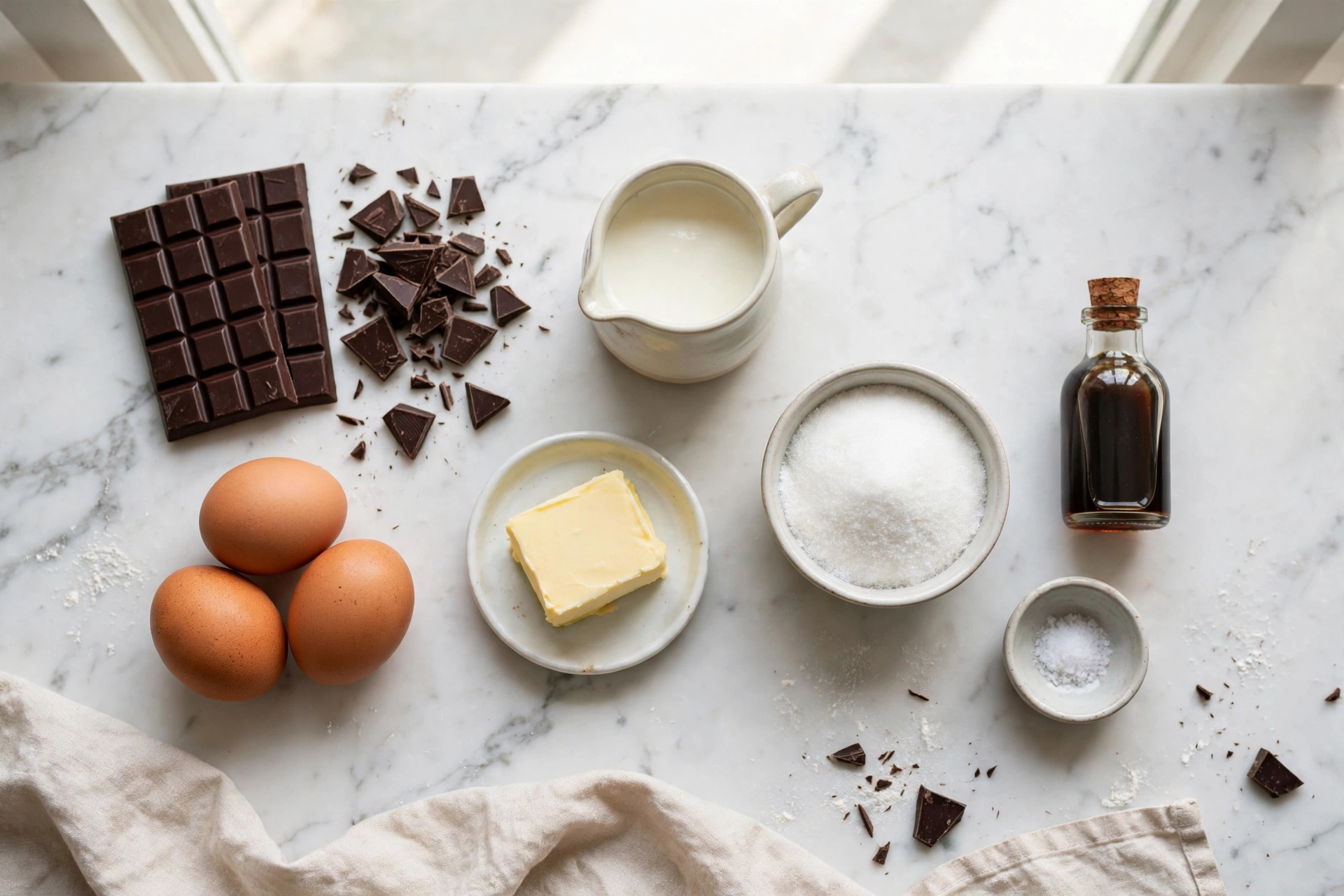
- 7 ounces (200g) dark chocolate, 60–70% cocoa, chopped — the flavor of the whole dessert. Chop it fine so it melts evenly. Chocolate chips work too, but a chopped bar melts smoother and tastes better.
- 2 tablespoons (28g) unsalted butter — melts with the chocolate for shine and silkiness, and keeps the chocolate from seizing as it cools. Salted butter works in a pinch; just reduce the added salt slightly.
- 3 large eggs, separated, at room temperature — the yolks enrich the chocolate base and the whites whip into the air that makes the mousse light. Room-temperature whites whip higher and faster than cold ones, so take the eggs out of the fridge 30 minutes before you start.
- 1/4 cup (50g) granulated sugar, divided — 2 tablespoons go into the chocolate base with the yolks, and 2 tablespoons go into the egg whites to stabilize them. This is not a very sweet mousse; the chocolate leads.
- 1 cup (240ml) cold heavy whipping cream — whipped to soft peaks and folded in for the mousse’s rich, velvety body. Use full-fat cream, at least 35 percent fat, and keep it cold until the moment you whip it. Warm cream will not whip.
- 1 teaspoon vanilla extract — rounds out the chocolate and adds warmth. Real vanilla is worth it here, since there is nothing to hide behind.
- 1/4 teaspoon salt — salt does not make mousse salty; it makes the chocolate taste more like chocolate, and it helps the egg whites whip. Do not skip it.
How to Make Chocolate Mousse
Twenty-five minutes of active work, then the fridge takes over. Read through the steps once before you start, because the order matters: melt the chocolate first, whisk in the yolks second, whip the cream and the whites third, and fold everything together last — gently, always gently.
- Melt the chocolate and butter. Place the chopped chocolate and butter in a heatproof bowl set over a saucepan of barely simmering water, making sure the bowl does not touch the water. Stir occasionally until completely melted and smooth, about 4 to 5 minutes. Or microwave in 30-second bursts, stirring between each. Remove from the heat and let it cool for 5 minutes — it should feel warm, not hot, when you touch the outside of the bowl.
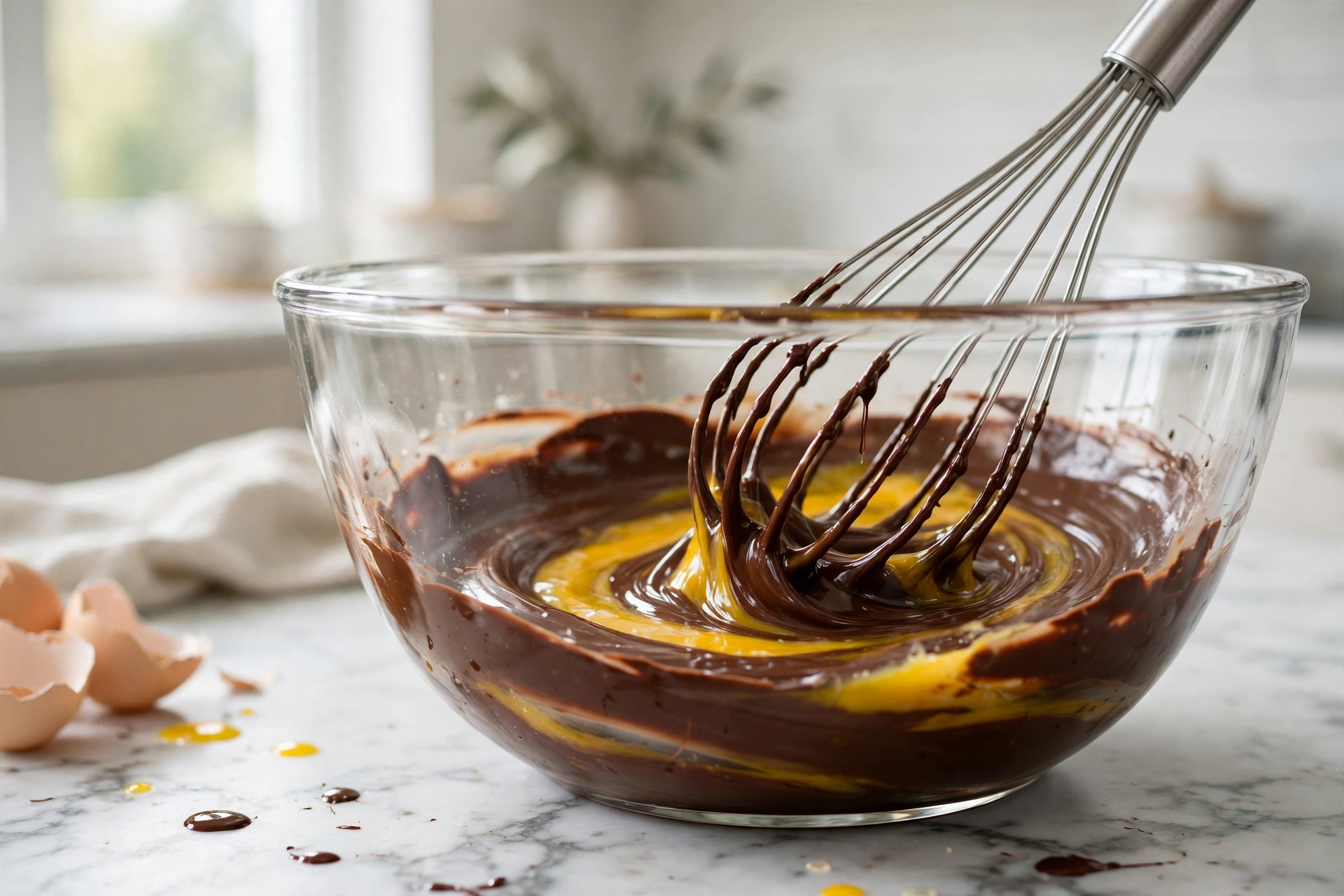
- Whisk in the yolks, sugar, vanilla, and salt. Add the three egg yolks, 2 tablespoons of the sugar, the vanilla, and the salt to the warm chocolate. Whisk until completely smooth and glossy, about 1 minute. The mixture will thicken slightly and turn a deep, shiny brown. Set aside while you whip the cream and the whites.
- Whip the cream to soft peaks. In a cold bowl, beat the heavy cream with an electric mixer on medium-high speed until it holds soft peaks — the cream should mound on the whisk and then flop over gently. This takes about 2 minutes. Do not whip it to stiff peaks; soft peaks fold into the chocolate far more easily and keep the mousse light.
- Whip the egg whites to stiff peaks. In a separate, scrupulously clean bowl, beat the egg whites on medium speed until foamy, then add the remaining 2 tablespoons of sugar a little at a time. Increase to high speed and beat until the whites hold stiff, glossy peaks that stand straight up when you lift the beaters, about 2 to 3 minutes. Any trace of yolk or grease in the bowl will stop the whites from whipping, so wipe the bowl and beaters dry first.
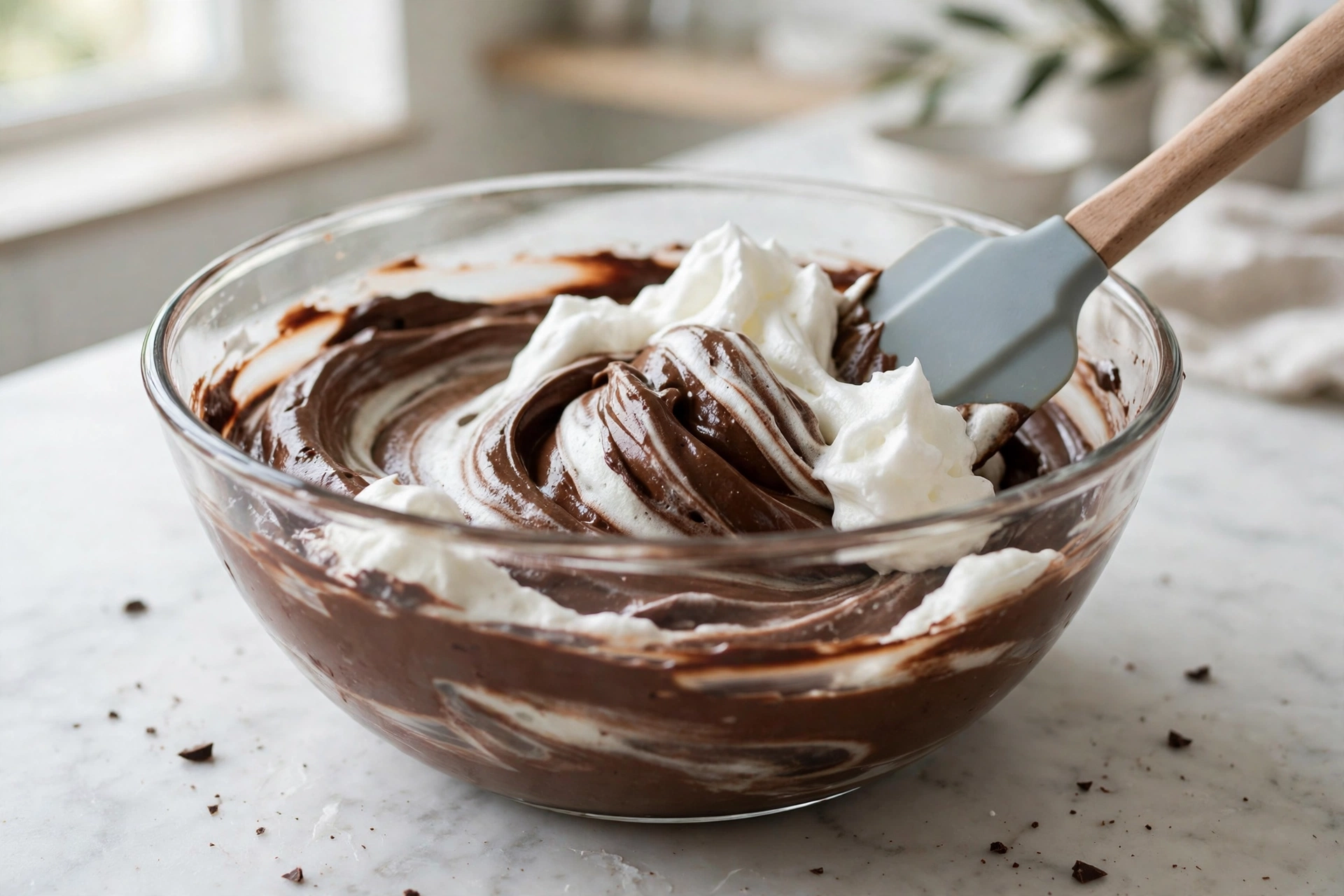
- Fold in the whipped cream. Add about one-third of the whipped cream to the chocolate base and stir it in firmly — this loosens the chocolate and makes the rest of the folding easier. Then add the remaining cream in two additions, folding gently with a large spatula: cut down through the center, scoop along the bottom, and lift up and over. Turn the bowl a quarter-turn between folds. Stop as soon as no white streaks remain.
- Fold in the egg whites. Add the whipped egg whites in two additions, folding the same way — cut, scoop, lift, turn. Be patient and be gentle: every fold that is too rough knocks air out, and the air is the whole point of the dessert. A few tiny white streaks are fine; over-mixing is not. Stop when the mousse looks evenly chocolatey with no large streaks left.
- Portion and chill. Spoon or pipe the mousse into six small cups, ramekins, or dessert glasses — about 1/2 cup each. Cover each one with plastic wrap and refrigerate for at least 4 hours, or overnight, until fully set and cold. The mousse will firm up as the chocolate sets, but it should still feel light and airy on the spoon.
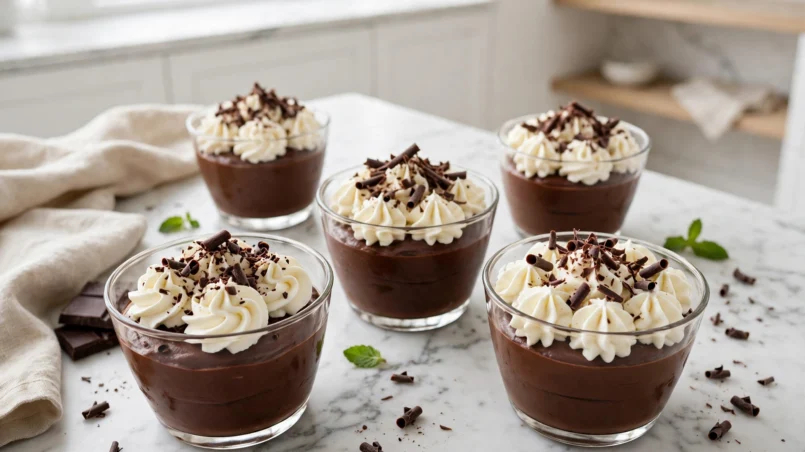
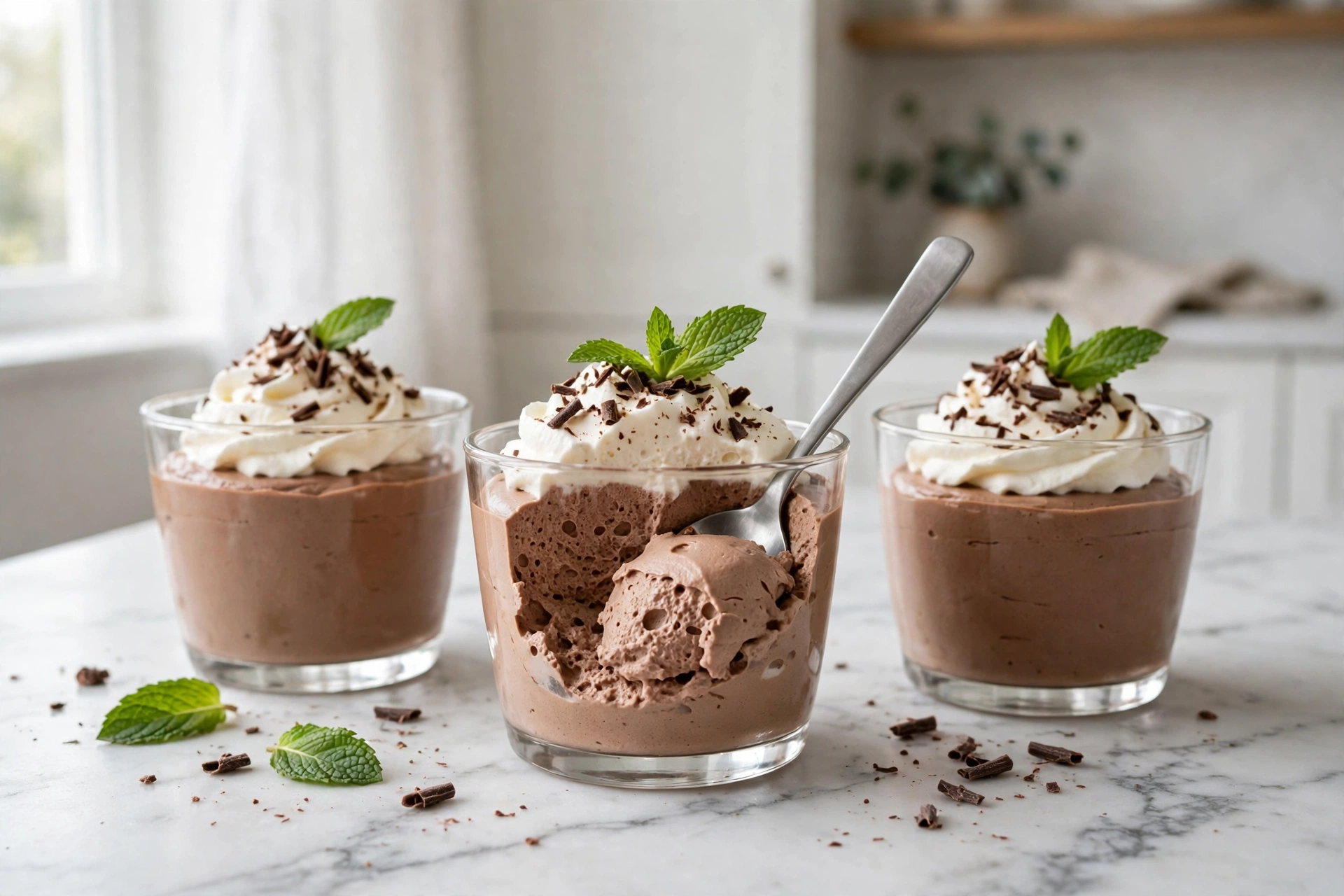
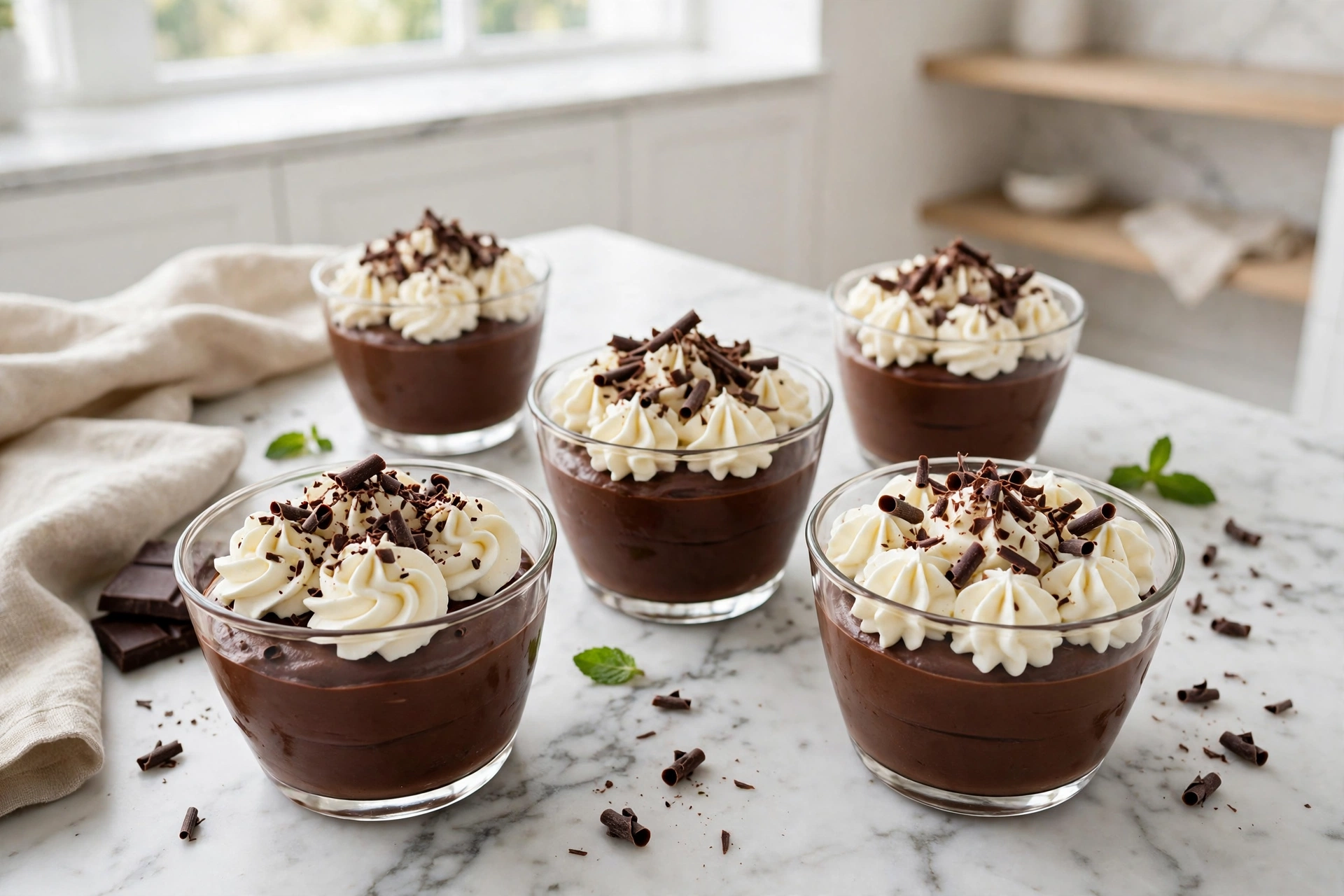
- Serve cold. Serve straight from the fridge, topped with a dollop of whipped cream, chocolate shavings, or a few fresh berries. The mousse should hold its shape on a spoon and melt on your tongue like a cloud.
Pro Tips for the Best Results
- Use good chocolate, and chop it fine. This mousse has only seven ingredients and no flour or gelatin to hide behind, so the chocolate is everything. A 60 to 70 percent dark chocolate gives the best balance of richness and sweetness. Chop it into small, even pieces so it melts smoothly without hot spots.
- Let the chocolate cool before adding the yolks. If the chocolate is too hot, it will cook the yolks and turn the base grainy. Five minutes off the heat is enough — the bowl should feel warm, not hot, against your palm. If it has cooled too much and started to thicken, set it over the warm water for 30 seconds to loosen it again.
- Whip the cream to soft peaks, not stiff. Stiff cream is harder to fold and knocks more air out of the mousse. Soft peaks — cream that mounds and flops — fold in smoothly and keep the texture light. If you overshoot, whisk in a splash of unwhipped cream to loosen it back up.
- Keep the whites’ bowl spotless. Egg whites will not whip if there is any fat in the bowl — a trace of yolk, a drop of cream, a greasy film. Use a clean glass or metal bowl, wipe it with a little vinegar or lemon juice first if you want to be sure, and separate each egg over a small bowl before adding the white to the main bowl, so one broken yolk cannot ruin the batch.
- Fold, do not stir. Stirring in circles pushes the air out. Folding — cut down, scoop along the bottom, lift up and over, turn the bowl — keeps the air in. Use a large, flexible spatula and a big bowl so you have room to fold properly. It feels slow, but it is the difference between mousse and chocolate pudding.
- Loosen the base first. Stirring the first third of the whipped cream into the chocolate base firmly is not a mistake — it lightens the dense chocolate so the remaining cream and whites fold in without deflating. Skip this step and you will be folding forever, losing air with every stroke.
- Chill it properly. Four hours is the minimum. The mousse needs that time for the chocolate to set and for the flavors to come together — warm mousse tastes sweeter and less chocolatey than the same mousse cold. Overnight is even better, and it makes this a perfect make-ahead dessert for a dinner party.
Substitutions and Variations
This recipe is forgiving in some places and strict in others. Here is what I know works:
- Milk chocolate mousse: Swap the dark chocolate for milk chocolate and reduce the sugar to 2 tablespoons total — milk chocolate is already sweet, and the mousse can turn cloying if you keep the full amount. The texture will be a little softer, so chill it a full 6 hours.
- Mocha mousse: Add 1 teaspoon of instant espresso powder to the chocolate as it melts, or replace 2 tablespoons of the cream with strong brewed coffee. You will not taste coffee; it just makes the chocolate taste darker and deeper.
- Orange chocolate mousse: Add 1 teaspoon of finely grated orange zest and 1 tablespoon of orange liqueur to the chocolate base with the yolks. Chocolate and orange are a classic pairing, and the zest lifts the whole dessert.
- Mint chocolate mousse: Add 1/4 teaspoon of peppermint extract with the vanilla, and top with crushed candy canes or chocolate mint pieces. A holiday version that disappears fast.
- Chocolate peanut butter mousse: Whisk 3 tablespoons of smooth peanut butter into the warm chocolate along with the butter. It melts in completely and turns the whole thing into a peanut butter cup in mousse form. Top with chopped peanuts.
- Eggless mousse: Skip the eggs entirely and whip 1 1/2 cups of cold heavy cream to soft peaks instead of 1 cup, folding it all into the melted chocolate with the butter. It will be denser and more like a chocolate cream than a classic mousse, but it works — and it sets firmly after 4 hours in the fridge. See also our eggless brownies for another egg-free chocolate dessert.
- Layered dessert: Spoon the chilled mousse into glasses in layers with whipped cream and crushed cookies or our chocolate cupcake crumbs for an easy trifle-style dessert that looks like it took hours.
- Scaling: The recipe doubles cleanly — just use a bigger bowl and give the folding a little more time. Halving it works too, in a smaller bowl, for three servings. Keep the ratios exactly the same.
How to Store
Refrigerator: Covered with plastic wrap, chocolate mousse keeps for 3 to 4 days in the fridge. It actually tastes better on day two, once the flavors have fully melded. Serve it cold, straight from the fridge, and add the whipped cream topping just before serving so it stays fresh.
Freezer: You can freeze mousse, and unlike pudding it freezes well — the high fat content keeps the texture smooth. Freeze the portioned cups, covered, for up to 1 month. Thaw overnight in the fridge before serving. The texture will be a little denser than fresh, more like a frozen chocolate cream, but still delicious.
Make-ahead: This is an ideal make-ahead dessert. Make it the night before, chill overnight, and serve the next day. The plastic wrap keeps it perfect, and the flavors deepen overnight — which is why I almost always make mousse a day ahead when I am cooking for guests.
Frequently Asked Questions
Why is my chocolate mousse dense instead of light and airy?
Almost always the folding was too rough, or the cream or whites were over-whipped. Folding means cut, scoop, lift, and turn — never stirring in circles, which pushes the air out. Whip the cream only to soft peaks and the whites only to stiff, glossy peaks; over-whipped cream turns grainy and will not fold in smoothly. And loosen the chocolate base with the first third of the cream before folding in the rest, so you need fewer strokes overall.
Why did my chocolate mousse not set?
Either it did not chill long enough, or the chocolate was too weak. The mousse needs at least 4 hours in the fridge for the chocolate to firm up — check it after 4 hours, not after 2. Also make sure you used real dark chocolate at 60 to 70 percent cocoa; milk chocolate or low-cocoa chocolate sets much softer. And use full-fat heavy cream — low-fat cream will not whip properly and gives a runnier mousse.
Can I make chocolate mousse without raw eggs?
This classic recipe uses raw egg whites whipped into the mousse, which is how traditional French mousse au chocolat is made. If raw eggs concern you, use pasteurized eggs — they whip exactly the same way and are safe to eat uncooked. Or use the eggless variation above, which skips the eggs entirely and uses extra whipped cream instead. Either way, use fresh eggs from a reliable source and keep the mousse refrigerated.
Can I make chocolate mousse without gelatin?
Yes — this recipe has no gelatin at all. The chocolate itself is what sets the mousse: as it chills, the cocoa butter in the chocolate firms up and holds the whipped cream and egg whites in place. That is the classic French method, and it gives a lighter, more delicate texture than a gelatin-set mousse. Just give it the full 4 hours in the fridge.
How do I keep chocolate mousse from deflating?
Three things: whip the whites to proper stiff, glossy peaks so they hold their air; fold gently and stop as soon as the streaks disappear; and chill the mousse as soon as it is portioned. A mousse left sitting at room temperature will slowly collapse as the chocolate softens. Once it is cold and set, it holds its shape well for days.
How long does homemade chocolate mousse last?
Covered with plastic wrap, it keeps 3 to 4 days in the refrigerator. It tastes best in the first two days. You can also freeze the portioned cups for up to 1 month and thaw them overnight in the fridge. Add whipped cream and chocolate shavings just before serving, not before storing, so the topping stays fresh.
Can I use this chocolate mousse as a cake filling?
Yes, and it is wonderful for it. Chilled mousse works beautifully as a filling between cake layers — just make sure it is fully chilled and set first, and assemble the cake the same day you plan to serve it. It is softer than buttercream, so it works best in a cake with a sturdy structure, like our chocolate cake recipe, and it needs to stay refrigerated until serving.
Nutrition (Per Serving, Approximate)
Calories: 380 | Carbohydrates: 24g | Protein: 6g | Fat: 30g | Sugar: 20g
Nutrition values are estimated for 1 of 6 servings and may vary based on exact ingredients used.
More Recipes You Will Love
| Recipe | Category |
|---|---|
| Chocolate Cake Recipe | Chocolate Cakes |
| Chocolate Pudding Recipe | Chocolate Treats and Candy |
| Chocolate Ganache Recipe | Chocolate Treats and Candy |
| Chocolate Cupcake Recipe | Chocolate Cakes |
Chocolate Mousse Recipe
Ingredients
Method
- Melt chocolate and butter in a heatproof bowl over barely simmering water (or microwave in 30-second bursts), stirring until smooth; cool 5 minutes until warm, not hot.
- Whisk in egg yolks, 2 tablespoons sugar, vanilla and salt until smooth and glossy.
- Whip cold heavy cream to soft peaks.
- In a clean bowl, whip egg whites to soft peaks, add remaining 2 tablespoons sugar gradually, and beat to stiff glossy peaks.
- Fold whipped cream into the chocolate base in 2 additions, starting with one-third stirred in firmly to loosen the base.
- Fold in egg whites in 2 additions, gently, until no large streaks remain.
- Divide among 6 cups or ramekins, cover, and chill at least 4 hours (overnight best) until set.
- Serve cold with whipped cream and chocolate shavings.
Notes
Prefer your chocolate as a drink instead of a dessert? Try our hot chocolate recipe — real hot chocolate from scratch in 10 minutes, with cocoa powder and melted dark chocolate whisked into a glossy paste first so it never goes lumpy.